


close
Choose Your Site
Global
Social Media

Views: 0 Author: Site Editor Publish Time: 2026-02-13 Origin: Site
The global instant food industry has undergone remarkable transformation over the past decade. Among its fastest-growing segments is the instant rice noodle category, driven by increasing consumer demand for gluten-free options, convenient meal solutions, and diverse regional flavors. As urbanization accelerates and lifestyles become more fast-paced, instant rice noodles are becoming a staple product not only in Asia but also in Europe, North America, and emerging markets.
For food manufacturers, entering or expanding in this segment presents tremendous opportunity—but also serious responsibility. The selection of the right instant rice noodles production line is not merely a technical purchasing decision. It is a long-term strategic investment that directly influences product quality, production efficiency, operational stability, brand reputation, and profitability.
A poorly selected production line can result in inconsistent texture, high energy consumption, frequent downtime, and limited scalability. In contrast, a properly engineered and carefully selected system can support sustainable growth for many years. Understanding the key factors involved in choosing the right instant rice noodles production line is essential for making a confident and informed decision.
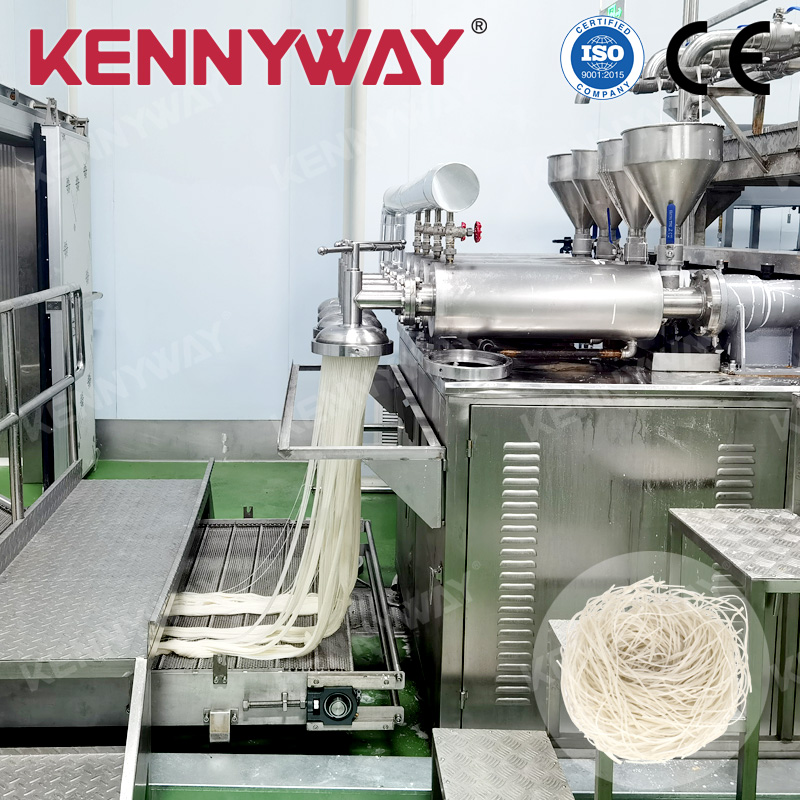
Before comparing machine specifications or automation levels, manufacturers must first clearly define their product vision. Equipment should serve product strategy—not the other way around.
Instant rice noodles can vary significantly in structure and processing method. Some manufacturers focus on fried instant rice noodles for rapid rehydration and distinct texture, while others produce non-fried varieties aimed at health-conscious consumers. The choice between these two categories directly impacts drying or frying system configuration, energy requirements, and production costs.
Product format is another important consideration. Cup-style noodles require compact cake forming and precise portion control. Bowl-packed noodles demand structural stability during transportation. Bag-packed formats often prioritize cost efficiency and flexible packaging speed. Each format influences the design of the forming, cutting, and packaging integration system within the instant rice noodles production line.
Texture expectations also differ across markets. Some regions prefer softer, elastic noodles with longer soaking tolerance. Others require firm structure and fast cooking time. Achieving these characteristics depends on precise control over steaming, extrusion pressure, and drying curves. Selecting equipment that allows fine parameter adjustment ensures flexibility in meeting various market preferences.
In short, a clear product roadmap provides the foundation for selecting the appropriate technical solution.
One of the most critical factors in selecting an instant rice noodles production line is production capacity. Manufacturers must carefully analyze both current demand and projected market growth.
Small-scale startups may initially require moderate daily output to control investment risk. Medium-sized enterprises may aim for continuous production capable of serving regional distribution networks. Large-scale industrial manufacturers often require high-speed, fully automated systems designed for mass production and export markets.
However, choosing capacity is not only about meeting current demand. Over-investing in oversized equipment can increase capital burden and energy consumption, while under-investing can create bottlenecks that restrict growth. The ideal solution often lies in selecting a modular instant rice noodles production line that allows future expansion.
Modular systems enable manufacturers to increase capacity by adding additional drying units, forming sections, or packaging modules without replacing the entire line. This approach protects the original investment while providing flexibility to scale operations as demand increases.
Careful capacity planning ensures that the selected system aligns with both financial capabilities and long-term strategic goals.
Modern food manufacturing increasingly relies on automation to improve efficiency and reduce human error. The level of automation integrated into an instant rice noodles production line significantly affects operational cost structure and product consistency.
Manual or semi-automatic systems may appear more affordable initially, but they require higher labor input and are more susceptible to variability. Manual parameter adjustments can lead to inconsistent steaming temperatures or unstable extrusion pressure, resulting in uneven product quality.
Fully automated systems, on the other hand, integrate centralized PLC control systems that coordinate each stage of production—from soaking and grinding to steaming, forming, drying, and packaging. These systems maintain precise temperature, humidity, and pressure settings throughout the production cycle.
Advanced instant rice noodles production line systems may also incorporate IoT connectivity and data monitoring dashboards. Real-time performance tracking allows managers to analyze efficiency, detect deviations, and optimize production parameters. Predictive maintenance systems can identify potential equipment issues before breakdown occurs, minimizing costly downtime.
In an increasingly competitive market environment, automation is not simply about reducing labor—it is about ensuring reliability, scalability, and long-term operational excellence.
Instant rice noodles require highly controlled processing stages to achieve consistent structure and taste. When selecting an instant rice noodles production line, manufacturers must evaluate how precisely each processing stage can be managed.
Steaming and gelatinization are critical steps. Uniform starch transformation ensures proper noodle elasticity and rehydration performance. Inadequate steaming may lead to brittle texture, while excessive heat can compromise structural integrity.
Extrusion systems must provide stable pressure control to maintain consistent noodle thickness and shape. Variations in extrusion force can cause uneven strands, breakage, or visual defects. High-quality forming systems are designed to minimize vibration and maintain dimensional accuracy.
Drying or frying stages are equally important. Multi-stage temperature control systems allow gradual moisture reduction, preventing cracking or warping. Intelligent drying curves ensure consistent internal moisture balance across each noodle cake.
A well-designed instant rice noodles production line provides synchronized control across all stages, reducing defect rates and enhancing brand reliability.
While initial purchase price is important, long-term operational cost often determines true profitability. Energy consumption, labor requirements, maintenance expenses, and raw material utilization all contribute to the total cost of ownership.
Modern instant rice noodles production line systems are increasingly engineered with energy-saving technologies. Heat recovery systems capture residual steam energy and redirect it into preheating processes. Improved insulation structures reduce thermal loss during steaming and drying. Efficient air circulation systems lower electricity usage without compromising drying performance.
Automation reduces labor cost by minimizing manual handling and supervision. Material conveying systems ensure smooth product flow between processing stages, reducing waste and preventing damage.
Manufacturers should conduct a comprehensive cost analysis that includes long-term energy savings and operational efficiency improvements, rather than focusing solely on equipment purchase price.
Durability is essential for maintaining continuous production under industrial conditions. An instant rice noodles production line should be constructed with high-grade, food-safe stainless steel that resists corrosion and supports easy cleaning.
Structural stability is equally important. Continuous vibration or misalignment can reduce equipment lifespan and compromise product consistency. Precision welding and high-quality electrical components contribute to long-term reliability.
Hygienic design principles should also be carefully evaluated. Equipment should allow easy access for cleaning and maintenance. Smooth internal surfaces reduce contamination risk and simplify sanitation procedures. Compliance with international food safety standards ensures smooth entry into export markets.
Selecting a production line built with high manufacturing standards minimizes breakdown risk and extends service life.
Selecting the right instant rice noodles production line is not only about comparing machine specifications. Equally important is evaluating the manufacturer responsible for designing and producing the system. The expertise, experience, and technical capability of the supplier will directly influence equipment reliability and long-term operational success.
An experienced manufacturer understands the full processing logic of rice-based products. From rice soaking ratios and grinding fineness to steaming temperature control and extrusion stability, every stage requires technical knowledge accumulated through years of practice. Manufacturers specializing in rice-, wheat flour-, and starch-based food machinery are more likely to provide optimized solutions rather than generic configurations.
Global project experience is another important factor. Manufacturers who have exported equipment to different countries understand varying regulatory standards, voltage requirements, climate conditions, and packaging preferences. This international perspective ensures smoother implementation and fewer unexpected complications.
When selecting an instant rice noodles production line, working with a knowledgeable and technically capable manufacturer significantly reduces risk.
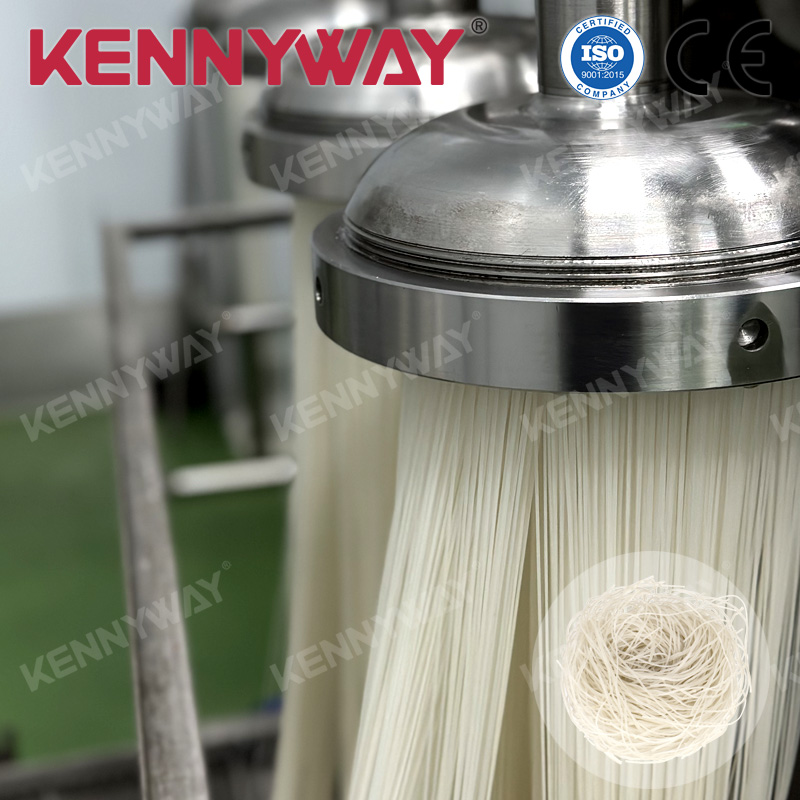
No two factories are identical. Available floor space, utility infrastructure, labor structure, and product positioning vary from one manufacturer to another. Therefore, customization capability becomes a decisive factor.
A professional instant rice noodles production line supplier should be able to provide:
Tailored production capacity planning
Factory layout design and optimization
Energy system integration planning
Customized forming molds and drying parameters
Engineering teams should analyze your specific requirements and design a production flow that maximizes efficiency while minimizing unnecessary movement and energy loss.
Additionally, a reliable supplier provides installation supervision, commissioning support, and trial production assistance. Proper commissioning ensures that steaming, extrusion, drying, and packaging parameters are correctly calibrated before full-scale production begins.
This level of engineering support transforms equipment purchase into a comprehensive production solution.
An instant rice noodles production line is a long-term asset, often operating continuously for many years. Ongoing technical support plays a crucial role in maintaining production stability.
After-sales service should include:
Operator training programs
Maintenance guidance and documentation
Spare parts supply assurance
Remote technical troubleshooting
Training ensures that operators fully understand system functionality, reducing the risk of misuse or improper parameter adjustment. Regular maintenance guidance extends equipment lifespan and preserves performance.
Fast spare parts availability is particularly important in high-output factories. Delayed replacement of key components can interrupt production and lead to financial losses. A dependable manufacturer ensures reliable parts supply and responsive service communication.
When evaluating suppliers, manufacturers should carefully examine service commitment and support infrastructure.
Food production equipment must meet strict safety and hygiene standards, especially for manufacturers targeting export markets. An instant rice noodles production line should comply with relevant international certifications and safety guidelines.
Hygienic design principles include smooth surfaces, minimal dead corners, easy disassembly for cleaning, and sealed electrical components to prevent contamination. Proper material selection, such as food-grade stainless steel, ensures safe contact with raw materials and finished products.
Certifications such as CE or ISO standards indicate that the equipment meets recognized safety and quality benchmarks. For export-oriented businesses, compliance simplifies regulatory approval and enhances credibility with distributors and retail partners.
Selecting equipment built according to international standards strengthens brand reputation and reduces regulatory risk.
Investing in an instant rice noodles production line involves significant capital expenditure. Risk management should therefore be part of the decision-making process.
Manufacturers should conduct comprehensive feasibility studies, including:
Market demand forecasting
Cost-benefit analysis
Energy consumption projection
Labor structure evaluation
Requesting equipment demonstrations, visiting reference factories, and reviewing previous installation cases can provide valuable insight into real-world performance.
Clear communication of product specifications, capacity expectations, and future expansion plans ensures that the selected system aligns with long-term strategy.
Careful planning reduces uncertainty and increases confidence in the investment decision.
Ultimately, the purpose of selecting the right instant rice noodles production line is to enhance profitability and strengthen market position.
Higher automation improves output stability and reduces defect rates. Efficient energy management lowers operating costs. Consistent product quality builds consumer trust and brand loyalty.
Faster production cycles enable quicker response to market trends, allowing manufacturers to introduce new flavors or formats with minimal disruption. Scalable systems support expansion without major reconstruction.
When viewed over the lifespan of the equipment, a well-designed instant rice noodles production line delivers measurable financial returns and sustainable competitive advantage.
Selecting the right instant rice noodles production line requires a comprehensive evaluation of product positioning, production capacity, automation level, processing precision, energy efficiency, equipment durability, manufacturer expertise, and long-term support.
Balancing these factors ensures that the chosen system not only meets immediate production goals but also supports future growth and innovation. A thoughtful, strategic approach transforms equipment selection from a simple purchase into a foundation for long-term business success.
In a rapidly evolving food industry, making the right choice today determines your competitive strength tomorrow.
Choosing the right instant rice noodles production line is only the first step—partnering with the right manufacturer makes all the difference. Guangzhou Kennyway Food Processing Machinery Co., Ltd., founded in 1994, has nearly 30 years of experience specializing in rice-, wheat flour-, and starch-based food machinery. We provide customized, high-efficiency instant rice noodles production line solutions designed to meet diverse capacity requirements, product formats, and factory layouts. From precision manufacturing and intelligent automation integration to installation, commissioning, and long-term technical support, Kennyway is committed to helping food manufacturers build stable, scalable, and future-ready production systems that drive sustainable growth.


