The global food industry is evolving rapidly, and instant rice noodles have become one of the most dynamic product categories in recent years. Driven by urban lifestyles, demand for convenience foods, and the increasing popularity of gluten-free alternatives, rice-based products are gaining strong momentum in both domestic and international markets.
For food manufacturers, this growth presents both opportunity and pressure. Companies that continue relying on traditional or semi-automatic equipment may struggle to maintain efficiency, consistency, and profitability. Upgrading to a modern rice noodles production line is no longer simply a technical improvement—it is a strategic decision that determines long-term competitiveness.
Rising Market Demand Requires Higher Production Standards
Consumer expectations have changed significantly. Today’s buyers expect instant rice noodles that cook quickly, maintain stable texture, and deliver consistent flavor in every package. At the same time, retail channels demand reliable supply capacity and standardized quality.
A traditional rice noodles production line often faces limitations in output stability and process control. Manual adjustments during steaming, extrusion, or drying can result in variations in noodle thickness, moisture content, and elasticity. As market demand increases, these inconsistencies can damage brand reputation.
Modern automated systems, however, are designed to maintain continuous processing with precise control over temperature, pressure, and humidity. This ensures that every batch meets the same quality standard, even at higher production volumes.
Limitations of Traditional Production Systems
Many older production lines were designed for smaller-scale operations or lower market expectations. While they may still function, they often create hidden operational inefficiencies.
First, labor dependency is significantly higher. Manual feeding, monitoring, and parameter adjustments increase labor costs and introduce human error. As wages continue to rise in many regions, this model becomes less sustainable.
Second, production bottlenecks frequently occur in critical stages such as steaming and drying. Uneven heat distribution or inconsistent airflow can cause cracking, breakage, or unstable moisture levels. These defects not only increase waste but also reduce overall productivity.
Finally, traditional rice noodles production line systems often lack integrated packaging automation. Slow packaging speeds can offset gains achieved in earlier processing stages, limiting total output capacity.
For manufacturers aiming to expand into competitive international markets, these limitations can become major obstacles.
Improved Efficiency Through Automation
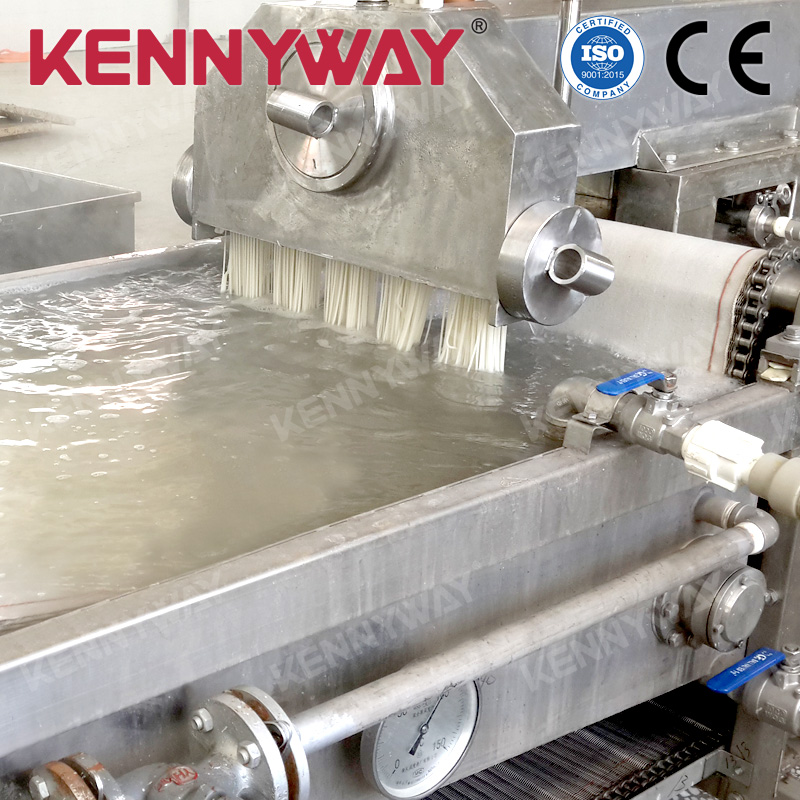
Upgrading to a modern rice noodles production line dramatically improves operational efficiency. Automated soaking, grinding, steaming, forming, drying, and packaging systems work in synchronized coordination, reducing production interruptions and maximizing throughput.
Continuous processing minimizes downtime between batches, while centralized PLC control systems maintain optimal operating parameters. This reduces raw material waste and ensures stable output over long production cycles.
Automation also reduces reliance on manual supervision. Instead of constant physical monitoring, operators can oversee performance through digital control panels, allowing better allocation of workforce resources.
The result is a production system that operates faster, more reliably, and more cost-effectively.
Enhanced Product Consistency and Quality Control
In the instant food industry, consistency directly impacts brand loyalty. Even minor variations in noodle texture or cooking time can affect consumer perception.
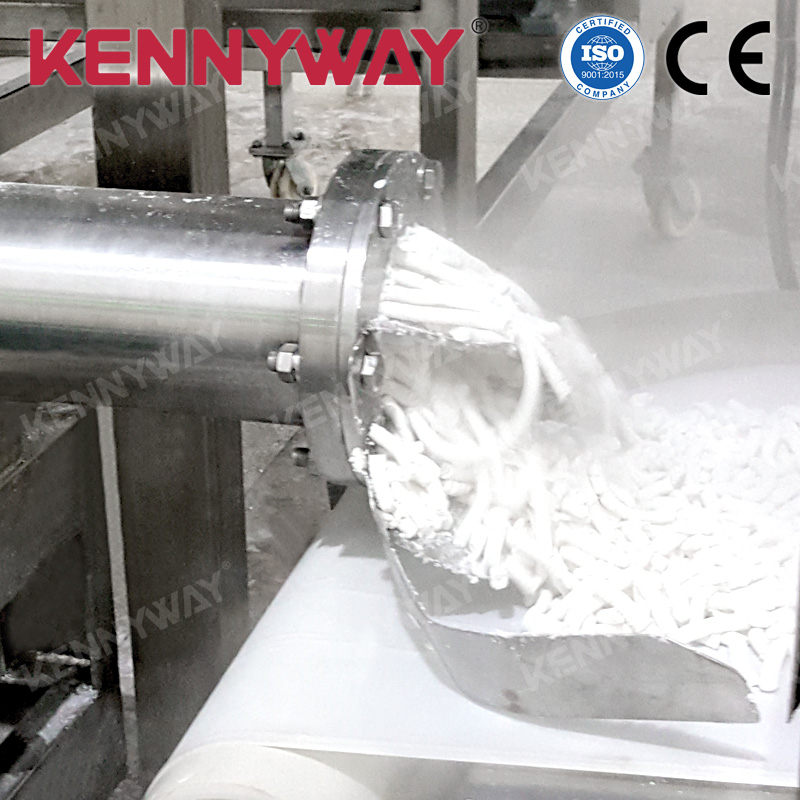
A modern rice noodles production line uses precise extrusion systems to maintain uniform thickness and shape. Intelligent steaming units ensure consistent starch gelatinization, while advanced drying systems control moisture reduction according to programmed drying curves.
These improvements reduce product defects and ensure that each package delivers the same quality experience. Additionally, automated monitoring systems provide real-time data tracking, supporting traceability and compliance with international food safety standards.
As regulations become stricter worldwide, this level of control becomes increasingly important.
Lower Long-Term Operating Costs
Although upgrading to a modern system requires initial investment, the long-term financial benefits are significant.
Labor costs are reduced through automation. Energy consumption becomes more efficient with optimized steam usage and heat recovery technologies. Waste levels decrease due to improved process stability.
Over time, these savings offset the initial equipment cost and improve overall return on investment. A high-performance rice noodles production line not only increases output but also strengthens profitability through operational efficiency.
Smart Technology Integration for Future-Ready Production
A modern rice noodles production line is not only automated—it is intelligent. Advanced PLC systems, sensor monitoring, and data collection platforms allow manufacturers to track production performance in real time.
Temperature, humidity, extrusion pressure, and drying parameters can all be precisely controlled and automatically adjusted. This reduces the need for manual intervention and ensures optimal processing conditions throughout the entire production cycle.
Some advanced systems also support remote diagnostics and predictive maintenance. By analyzing operational data, potential equipment issues can be identified before they cause downtime. This proactive approach significantly improves production stability and reduces unexpected repair costs.
In an increasingly digital manufacturing environment, smart integration ensures that food factories remain competitive and adaptable.
Supporting Product Diversification and Market Expansion
Consumer preferences are becoming more diverse. In addition to traditional flat rice noodles, markets now demand vermicelli, cup-style instant noodles, bowl-packed formats, and customized texture variations.
Upgrading to a modern rice noodles production line allows manufacturers to respond quickly to these trends. Adjustable forming molds, flexible cutting systems, and programmable drying curves make it easier to produce multiple product types on the same line.
This flexibility reduces the need for separate equipment investments and enables faster product development cycles. Manufacturers can introduce new product variations without major structural changes to their facilities.
In competitive markets, the ability to innovate quickly is a powerful advantage.
Sustainability and Energy Efficiency Advantages
Environmental responsibility has become an essential component of modern food production. Governments and consumers alike are paying closer attention to energy usage and environmental impact.
A modern rice noodles production line is typically designed with energy-saving features such as optimized steam systems, improved insulation structures, and heat recovery mechanisms. These technologies reduce fuel consumption and lower carbon emissions.
Water usage can also be minimized through more efficient soaking and cleaning processes. Over time, these improvements reduce operational expenses while supporting sustainable manufacturing practices.
For companies exporting to international markets, demonstrating environmentally responsible production can enhance brand image and meet regulatory expectations.
Financial Perspective: Investment with Long-Term Returns
Upgrading production equipment is a significant decision, but it should be viewed as a strategic investment rather than an expense.
Higher automation reduces labor costs and improves daily output capacity. Stable product quality decreases customer complaints and returns. Faster production cycles increase overall revenue potential.
When calculated over several years of operation, the return on investment from a modern rice noodles production line often outweighs the initial upgrade cost. Companies that modernize early are better positioned to capture growing market share while competitors struggle with outdated systems.
Conclusion: A Strategic Step Toward Sustainable Growth
In today’s fast-moving food industry, standing still is not an option. Manufacturers must continuously improve efficiency, quality, and flexibility to remain competitive.
Upgrading to a modern rice noodles production line offers clear advantages: higher productivity, consistent product quality, reduced operating costs, smarter technology integration, and greater market adaptability.
For food manufacturers seeking long-term growth, modernization is not merely an upgrade—it is a strategic step toward building a more efficient, scalable, and future-ready production system.
Upgrade with a Trusted Manufacturing Partner
At Guangzhou Kennyway Food Processing Machinery Co., Ltd., we have been specializing in rice-, wheat flour-, and starch-based food machinery since 1994. With nearly 30 years of industry experience, we provide modern, fully automated rice noodles production line solutions designed to improve efficiency, ensure consistent quality, and reduce long-term operating costs. From customized system design and factory layout planning to installation and technical support, Kennyway delivers reliable, future-ready equipment to help food manufacturers upgrade with confidence and stay competitive in a rapidly evolving market.


