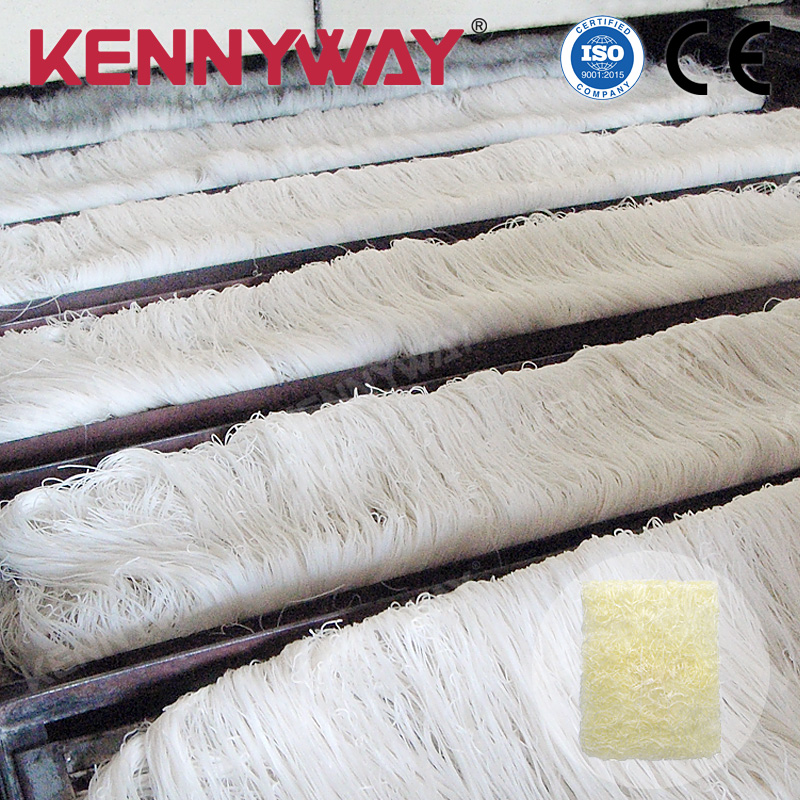
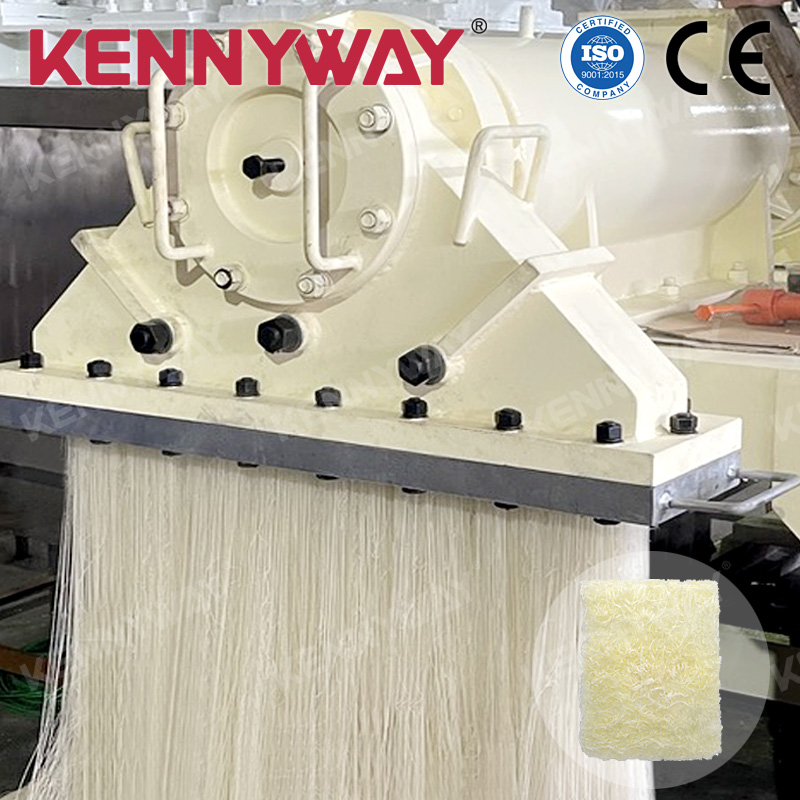
As global demand for convenient, gluten-free, and ready-to-eat foods continues to rise, instant rice noodles are becoming an increasingly important segment in the food processing industry. Consumers are looking for fast preparation, consistent quality, and healthier alternatives to traditional wheat-based products. For manufacturers, this growing demand presents both opportunity and pressure.
In 2026, the transformation of the rice noodles production line will be driven primarily by automation, intelligence, and sustainability. Food factories can no longer rely on labor-intensive operations or semi-automatic systems if they want to remain competitive. Instead, advanced automated production technology is becoming the foundation for higher efficiency, stable product quality, and long-term profitability.

Global Market Trends Driving Automation
The evolution of automated instant rice noodles production line technology is not happening in isolation. It is shaped by several major global trends that are influencing investment decisions across the food manufacturing sector.
Rising Demand for Instant Rice Noodles
Instant rice noodles are gaining popularity across Southeast Asia, Europe, North America, and emerging markets. Urban lifestyles are accelerating demand for quick-cooking and ready-to-eat products. At the same time, the growing preference for gluten-free diets has expanded the consumer base for rice-based alternatives.
To meet this increasing demand, manufacturers must adopt high-capacity, stable, and efficient rice noodles production line systems that can maintain consistent output without compromising quality.
Increasing Labor Costs and Workforce Challenges
Many regions are experiencing rising labor costs and workforce shortages in manufacturing industries. Traditional rice noodle production methods often require intensive manual handling, monitoring, and adjustment.
Automation reduces dependency on manual labor by integrating intelligent control systems, continuous conveying mechanisms, and automated packaging solutions. By 2026, highly automated production lines will become the standard rather than the exception.
Stricter Food Safety and Quality Standards
Food safety regulations are becoming more stringent worldwide. Manufacturers are required to ensure hygienic production environments, consistent product quality, and full traceability of production data.
Advanced automated rice noodles production line systems provide controlled processing environments, precise temperature and humidity regulation, and digital production monitoring. These features significantly improve compliance with international food safety standards.
What Defines an Automated Instant Rice Noodles Production Line in 2026
Automation in 2026 goes beyond simply connecting machines together. It represents a fully integrated, intelligent, and data-driven production ecosystem.
Continuous and Integrated Processing
A modern rice noodles production line in 2026 will include:
Automated rice soaking and washing systems
Precision grinding and slurry mixing
Intelligent steaming and gelatinization units
Stable extrusion or sheet-forming systems
Automated cutting and portioning
Continuous drying or frying systems
Integrated packaging solutions
Each stage operates in synchronization, controlled by centralized PLC systems that maintain optimal processing parameters throughout the entire production cycle.
Continuous production not only increases output but also ensures uniform noodle texture, thickness, and moisture distribution.
High-Speed Drying and Energy Optimization
Drying technology plays a critical role in instant rice noodle production. In 2026, advanced drying systems are designed with:
Multi-layer temperature control
Intelligent humidity adjustment
Energy recovery mechanisms
These improvements ensure faster drying cycles while maintaining noodle elasticity and structural integrity. At the same time, energy consumption is significantly reduced, contributing to sustainable production goals.
Key Technological Innovations Shaping 2026
Technological innovation is at the heart of the future rice noodles production line. Several breakthroughs are redefining how factories operate.
Smart PLC and IoT Integration
Modern automated production lines incorporate smart PLC control systems connected to IoT platforms. These systems allow:
Real-time production monitoring
Remote system diagnostics
Predictive maintenance alerts
Performance data analysis
Factory managers can monitor equipment status, production output, and energy usage through digital dashboards, enabling faster and more informed decision-making.
AI-Assisted Process Optimization
Artificial intelligence is increasingly used to optimize production parameters automatically. AI systems can analyze:
Based on collected data, the system adjusts parameters to maintain optimal conditions. This reduces human error and ensures stable quality in every batch of instant rice noodles.

Efficiency Gains Through Automation
The most significant advantage of adopting advanced automation in a rice noodles production line is operational efficiency.
Automated systems increase output capacity while maintaining uniform quality. Continuous processing reduces production interruptions, and intelligent monitoring minimizes material waste. With fewer manual interventions, factories experience lower operational risk and improved production stability.
As competition intensifies in 2026, efficiency will no longer be optional—it will be essential for survival and growth.
Quality Control in the Next-Generation Production Environment
As automation advances, quality control within the rice noodles production line becomes more precise and data-driven. In 2026, manufacturers are no longer relying solely on manual inspection. Instead, intelligent systems are embedded directly into the production process.
Advanced sensors monitor temperature, humidity, pressure, and moisture content in real time. During steaming and gelatinization, precise thermal control ensures uniform starch transformation. In the drying stage, intelligent drying curves automatically adjust airflow and heat distribution to prevent cracking, uneven dehydration, or texture instability.
Some high-end systems also integrate automated visual inspection technologies that detect irregular shapes, breakage, or surface defects before packaging. This level of in-line quality control significantly reduces waste and ensures consistent product standards across large production volumes.
Sustainability and Energy Efficiency as Core Priorities
By 2026, sustainability is no longer just a marketing concept—it is a competitive requirement. Food manufacturers are under pressure to reduce energy consumption, water usage, and carbon emissions.
Modern automated rice noodles production line systems are designed with energy-saving features such as:
Steam heat recovery systems
Optimized thermal insulation structures
Water recycling mechanisms
Reduced oil consumption in frying processes
These innovations not only lower environmental impact but also reduce long-term operating costs. Energy efficiency directly improves profit margins while aligning with global sustainability standards.
Modular and Scalable Production Design
Flexibility is another defining feature of 2026 production technology. Markets change quickly, and manufacturers must adapt without completely replacing their equipment.
Future-ready rice noodles production line systems are increasingly built with modular architecture. This allows factories to:
Expand capacity by adding modules
Upgrade automation levels step by step
Introduce new product formats with minimal structural changes
Modular design reduces investment risk and ensures long-term scalability. Businesses can start with a medium-capacity system and expand as demand grows, maintaining a strong competitive position.
Customization Trends in Instant Rice Noodles Production
Consumer preferences are diversifying, and production lines must adapt accordingly.
In 2026, customization capabilities within a rice noodles production line include:
Adjustable noodle thickness and width
Multiple forming molds for different product shapes
Compatibility with cup, bowl, or bag packaging formats
Fast product changeover systems
Regional taste variations also influence texture requirements. Some markets prefer softer noodles with higher elasticity, while others demand firmer texture and faster rehydration time. Advanced extrusion and drying control systems allow precise adjustments to meet these regional preferences.
Challenges in Adopting Advanced Automation
Despite its many advantages, transitioning to a fully automated rice noodles production line requires careful planning.
Initial Investment Considerations
High-level automation involves greater upfront capital investment. Manufacturers must evaluate long-term return on investment by analyzing labor savings, increased capacity, and improved efficiency.
Technical Expertise Requirements
Automated systems require trained operators and maintenance personnel. Investing in technical training becomes essential to fully utilize smart control and monitoring systems.
Integration with Existing Facilities
For factories upgrading from semi-automatic lines, layout adjustments and system integration planning are crucial. Proper engineering design ensures smooth implementation without disrupting existing operations.
Competitive Advantage in 2026 and Beyond
Manufacturers that adopt advanced automation gain a clear competitive edge. A highly automated rice noodles production line enables faster product development cycles, consistent large-scale output, and rapid adaptation to changing consumer trends.
Data-driven production management enhances decision-making and operational transparency. Stable quality strengthens brand reputation. Energy-efficient systems improve profitability while supporting environmental responsibility.
In an increasingly competitive global food market, technology leadership will define industry leaders.
Conclusion
The future of automated instant rice noodles production line technology in 2026 is defined by intelligence, efficiency, sustainability, and flexibility. Automation is no longer a luxury—it is becoming the foundation of modern food manufacturing.
Manufacturers who invest strategically in advanced production systems today will be better positioned to meet tomorrow’s market demands. By embracing smart technology, optimizing production processes, and prioritizing long-term scalability, businesses can build a rice noodles production line that is efficient, future-ready, and capable of sustained growth in the years ahead.
Partner with an Advanced Automation Expert
At Guangzhou Kennyway Food Processing Machinery Co., Ltd., we specialize in designing and manufacturing intelligent, high-efficiency rice noodles production line solutions tailored for modern food factories. With nearly 30 years of experience in rice- and starch-based food machinery, we provide fully automated, scalable, and energy-efficient systems that help customers improve output, ensure consistent quality, and reduce operational costs. If you are planning to upgrade or invest in an automated instant rice noodles production line in 2026, Kennyway is ready to deliver a reliable, future-ready solution built for long-term success.