


close
Choose Your Site
Global
Social Media

Views: 184 Author: Site Editor Publish Time: 2025-11-09 Origin: Site
Flat rice noodles, with their delicate texture and subtle taste, are a beloved staple in many Asian cuisines, including Chinese, Thai, and Vietnamese. These noodles are often used in soups, stir-fries, and spring rolls, offering a versatile base for countless dishes. In recent years, the demand for flat rice noodles has skyrocketed, not only in Asia but also in Western countries, as people are increasingly discovering their unique flavor and texture.
However, the mass production of these noodles, which involves a complex and precise manufacturing process, was not always so easy. The invention of the flat rice noodle production line revolutionized how these noodles are made, leading to faster production, consistency in quality, and ultimately the ability to meet the growing global demand.
But who was behind the creation of the first flat rice noodle production line? Let’s take a deep dive into the history of this groundbreaking development and explore how it shaped the global food industry.
Before we delve into the specifics of who invented the first flat rice noodle production line, it's essential to understand the evolution of rice noodles themselves. Rice noodles have a long history in Asia, believed to have originated in China over 2,000 years ago. Initially, these noodles were handmade using simple tools such as a rolling pin and knife. The process involved soaking rice, grinding it into a paste, and then shaping the noodles by hand. This labor-intensive method limited production and often resulted in variations in the quality and size of the noodles.
As demand for rice noodles grew, particularly in countries like Thailand and Vietnam, the need for a more efficient production method became evident. Traditional methods, while still popular in smaller, artisanal settings, could not keep up with the increasing demand of both local markets and international export.
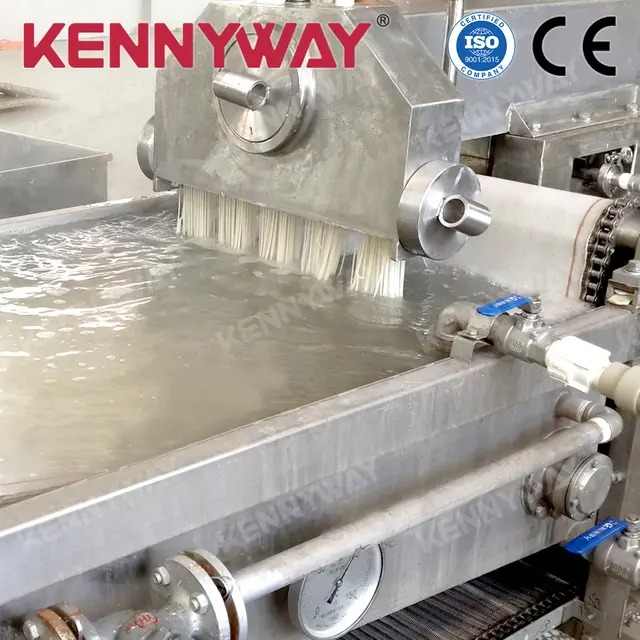
The turning point came in the early 20th century with the rise of industrialization and automation. As countries began to embrace mass production techniques for various industries, the food industry was no exception. By the mid-1900s, manufacturers were starting to develop machinery that could automate the production of noodles.
However, producing flat rice noodles—unlike round wheat noodles—required unique equipment, especially because of their delicate texture and the need for precise cutting. Early machinery simply wasn’t designed to handle the flexibility and thinness required for making flat rice noodles. The breakthrough came when engineers focused on the specific needs of rice noodle production, including the importance of creating noodles with a uniform thickness and consistent shape.
The first flat rice noodle production line is generally credited to a combination of technological innovation and ingenuity by engineers working in Asia, particularly in countries like Taiwan and Thailand, which were leaders in the rice noodle industry. In the 1970s, Taiwanese engineers were instrumental in developing the first fully automated flat rice noodle production line.
These early production lines typically involved a series of machines that worked together in a streamlined process. They included:
Rice soaking machines: Soaking rice for the necessary time to soften it before milling.
Rice grinders: Converting the soaked rice into a smooth, homogeneous paste.
Steaming systems: The paste is steamed to create a dough-like consistency.
Sheeting machines: The dough is flattened into thin sheets of noodle dough.
Cutting and shaping machines: The flat noodle sheets are cut into the signature flat, wide shape and length.
Drying or packaging stations: The noodles are either air-dried or packed fresh.
These innovations drastically reduced the amount of manual labor needed, while increasing both the speed and consistency of noodle production. Not only did this allow manufacturers to keep up with the increasing global demand, but it also paved the way for mass exportation of flat rice noodles to new markets around the world.
While the creation of the flat rice noodle production line is often attributed to Taiwanese engineers and machine manufacturers in the 1970s, there is no singular individual who can be credited with this invention. Instead, it was a collaborative effort involving engineers, food scientists, and manufacturers within the rapidly industrializing food sector.
Many of these engineers were trained in machinery and food production processes and brought a deep understanding of the nuances involved in rice noodle production. They worked with food experts to tailor machinery to the specific characteristics of rice, such as its water absorption rate and tendency to break during processing. This collaboration of disciplines ultimately led to the birth of the modern flat rice noodle production line.
The development of automated production lines had a profound effect on the rice noodle industry. Here are some of the key ways it changed the landscape:
Automated production ensured that every noodle produced met a consistent standard in terms of thickness, width, and texture. This consistency was key for both large-scale producers and consumers, who no longer had to worry about variations in product quality.
The ability to produce noodles quickly and efficiently meant that manufacturers could now meet the rising demand for flat rice noodles, not just locally, but internationally. In the past, only small batches of noodles could be produced at a time, limiting their availability. With industrialized production, entire factories could operate around the clock, resulting in higher yields and faster distribution.
Mass production also helped reduce costs. By automating the process, labor costs were lowered, and the machinery allowed for faster production, cutting down on energy and resource waste. This made flat rice noodles more affordable for both manufacturers and consumers.
With the ability to mass-produce high-quality noodles at scale, countries like Taiwan and Thailand began exporting their rice noodles to global markets. Restaurants in Western countries began to feature rice noodles in their menus, leading to a surge in global interest in Asian cuisine.
The automated production line also made it easier for manufacturers to experiment with different shapes, flavors, and noodle types. For instance, the process allowed for the creation of various kinds of rice noodle dishes, such as thin vermicelli noodles, thicker flat noodles, and even instant noodle versions.
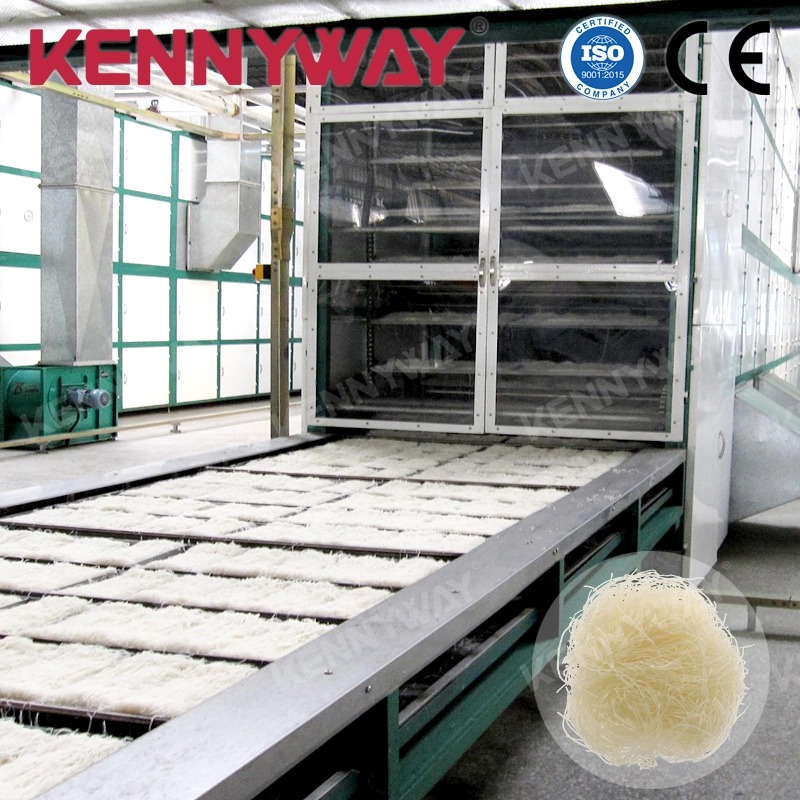
The modern flat rice noodle production line has evolved significantly since its invention in the 1970s. With the advancement of technology, contemporary production lines are now even more sophisticated, featuring digital controls, improved energy efficiency, and enhanced sanitation practices. Many of these lines also incorporate automation and artificial intelligence, enabling manufacturers to monitor every aspect of the production process remotely.
Today, countries like China, Thailand, Vietnam, and Taiwan are still major producers of flat rice noodles. However, the techniques developed in the 1970s have since spread worldwide, with manufacturers in countries across the globe now employing similar technology to meet the increasing demand for rice noodles.
The invention of the flat rice noodle production line was a crucial development in the food manufacturing industry. While no single inventor can be credited with this breakthrough, it was the combined efforts of engineers, food scientists, and manufacturers in Taiwan and other Asian countries in the 1970s that led to the first automated rice noodle production lines.
This innovation allowed for mass production, increased consistency, and expanded global distribution of flat rice noodles, forever changing the way we consume this beloved food. Today, rice noodles can be found in nearly every corner of the world, thanks to the pioneers who made it all possible.
Q1: What are flat rice noodles made of?
Flat rice noodles are primarily made from rice flour, water, and sometimes salt. The dough is steamed or boiled, then cut into thin, flat strips. Unlike wheat-based noodles, flat rice noodles are gluten-free, making them a popular option for those with dietary restrictions.
Q2: Are flat rice noodles the same as vermicelli?
While both are types of rice noodles, flat rice noodles and vermicelli differ in shape and thickness. Flat rice noodles are wide and flat, whereas vermicelli is much thinner and round in shape. Both types of noodles are used in different dishes depending on regional preferences.
Q3: Can flat rice noodles be made at home?
Yes, it is possible to make flat rice noodles at home, although it is a labor-intensive process. Homemade noodles are made by soaking rice, grinding it into a paste, and then flattening the dough by hand or using a pasta machine. However, most people opt for store-bought noodles due to the convenience and consistency offered by mass production.
Q4: Why are flat rice noodles so popular in Asian cuisine?
Flat rice noodles are a versatile ingredient that can be used in a variety of dishes, from soups and stir-fries to spring rolls and salads. Their chewy texture and ability to absorb flavors from sauces and broths make them a popular choice in many Asian cuisines.
Q5: Where can I buy flat rice noodles?
Flat rice noodles are widely available in supermarkets, especially in the Asian food section. They can also be purchased from specialty Asian grocery stores or online.


